

Mansa musa net worth is often considered to be the most an incredible ever recorded in human History and none of estimated modern day billionaires can compare to mansa Musa’s $400B fortune. Through his wealth, power, faith and generosity he became a figure of legend in West Africa, and beyond – across the Islamic world and Europe. Here’s a look at who Mansa Musa was, how he became so rich, what “net worth” really means in his instance and why his name still rings bells centuries later.
Quick Bio: Mansa Musa
| Aspect | Details |
|---|---|
| Full Name | Musa I of Mali (Mansa Musa) |
| Title | Emperor (Mansa) of the Mali Empire |
| Approximate Birth | Around 1280 CE |
| Death | Around 1337 CE |
| Reign | From ~1312 CE to ~1337 CE |
| Empire | Mali Empire, covering large parts of West Africa |
| Major Pilgrimage | Hajj to Mecca in ~1324 CE, famous for its extravagance and generosity |
Who Is Mansa Musa?
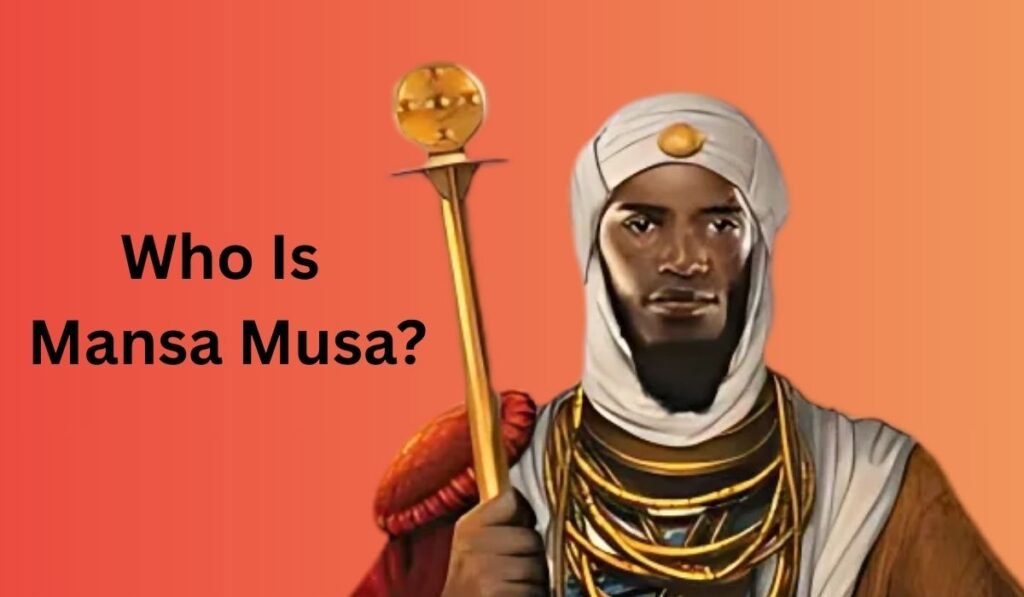
Mansa Musa was the ruler of the Mali Empire and is believed to be one of the wealthiest people in history. He reigned at a time Mali had access to large deposits of gold, benefited from trade across the Sahara desert and held political and religious sway. He is best known for the art he brought back on his pilgrimage to Mecca, where he impressed people by handing out enormous amounts of money. His leadership over Mali was one not only of physical and political success, with the economy booming in his reign along with growths in culture such as intellectual centres at abi Timbuktu and Gao.
Net Worth & “Mansa Musa Net Worth” – How Much Money is He Worth?
What “net worth” means in his world
It is hard to gauge the net worth of Mansa Musa because his fortune was tied to state resources, land and trade revenue – and the obligatory pilgrimage Muslims are required to take. Unlike contemporary net worth – frequently reduced to personal assets minus liabilities – in medieval Mali the emperor’s riches were more than control over mines, trade monopolies, taxation, tribute and labor.
Modern estimates & comparisons
- Some contemporary estimates place his wealth in the hundreds of billions of current U.S. dollars, potentially making him one of the richest people ever.
- Others provide more conservative estimates, but nearly all agree that his fortune was extraordinary and far in excess of any other ruler of his day.
- Analysts often recommend comparing his wealth to those of modern-day billionaires as an interesting way to show scale but that is purely speculative given inflation, currency value, and different economic systems.
How he accumulated and showcased his wealth
- Natural Resources: His empire was abundant in gold and salt. Mali was well-known for its substantial gold mines, as a result of which the empire held a crucial spot in worldwide supply of gold that time.
- Trade Routes: Mali dominated trans-Saharan trade, enable export of goods (gold, salt, ivory) and import luxury items, scholars and religious texts.
- Taxes and Tribute Subordinate areas and trading caravans ever paid taxes or tribute, further swelling state an d personal wealth.
- Public Works and Patronage: He spent on building of mosques, universities, libraries and infrastructure. They had a dual function, the religious and cultural, supporting status.
- Generosity and Pilgrimage His pilgrimage to Mecca (Hajj) where he distributed gold and built religious edifices not only showcased wealth but also political and religious soft power.
Early Life and Background
Family and lineage
- He was born circa 1280 CE to the Keita dynasty. His precise parentage is a matter of dispute, but he came from a line of previous rulers of Mali.
- He had inherited a portion of an empire that was already established; his predecessor had expanded Mali’s sphere before Musa assumed the reins entirely.
Childhood and context
- He was a prince who must have been versed in the ethics of leadership, religion, (Islam), administration and the customs of his people.
- Islam was already established among Mali’s elite; his upbringing was impacted by Arabic writing and scholarly traditions.
Education and Career
Education
- Not much is known of educational arrangements; instruction for royalty consisted in religious training, proficiency in Arabic and knowledge of commerce and politics.
- After his journey, he invited scholars, architects and religious men of other regions in the Islamic world to Mali.
Rise to Power & Reign
- He ascended to the throne by 1312 CE when the previous Mansa had gone missing.
- During his rule as emperor, he led Mali to become twice the accompanying size of the Ghana Empire and the Songhai Empire extending from the Atlantic coast to what is now La Côte d’Ivoire; Nigeria was not behind his hands).onestabletrade routes in between establishe Islamic scholarship and students, built upon previous architecture, enhanced Mali’s reputation beyond that of grandeur for itself in west Africa.
Net Worth Breakdown & Analysis
Features of His Wealth
- Gold production was central. His empire’s riches in gold mines made Mali a key supplier.
- It also controlled the Sahara trade routes were it managed to impose tax on goods and get involved in luxury trading.
- Vassal tribute and subsidiary taxes made a large contribution.
- His collective generosity – in pilgrimages and religious obligations – also worked to consolidate both prestige and influence.
Difficulties in Estimation
- sparse records, a lot of what is known comes from later documentation, wholesale narratives or Arabic clerks writing decades or centuries after the event.
- The state and an individual’s wealth were often the same, Yeide says, so it doesn’t make sense to try and distinguish “Mansa Musa’s personal net worth” from that of the Mali state.
- Translation of the medieval gold, land, or labor into modern currency is subject to wide variation due to all these assumptions.
Awards and Achievements
- Constructed grand mosques, such as the Djinguereber Mosque to enhance the city’s reputation as an architectural jewel.
- Centres of learning build universities and libraries in particular at Timbuktu.
- His 1324 pilgrimage placed Mali on the internationally map – people from outside of Africa heard about Mali’s riches.
- His reign was the “golden age” of the Mali Empire: stability, vitality of culture, architectural growth.
Social Media Presence
Even though Mansa Musa dwelt in the 14th century, there wasn’t really any real social media activity to attribute to him. (Any recent accounts are fan and or allegorical in nature). Here are some of the known accounts bearing his name; they do not have any legitimacy as pages of the historical figure’s own.
The following below are estimates of how many followers each has:
| Platform | Handle | Follower Count / Notes |
|---|---|---|
| @mansamxsa | ~4,795 followers – a fan profile, not authentic | |
| @mansamusamusic | ~438 followers – unrelated in terms of historical figure | |
| “Mansa Musa” page | ~5,300 followers – modern symbolic/fan page |
Additional Legacy & Interesting Facts
- The legacy of Mansa Musa could be seen in the Catalan Atlas (1375), which portrays him as sitting on a throne and holding a large nugget of gold, evidence that his legend had reached European mapmakers.
- He brought scholars and architects from the Middle East and North Africa to Mali, which led to an Islamic influence on architectural style as well as scholarly training in Timbuktu and Gao.
- His hajj was not only a religious procession, but also carried pointed implications of diplomacy and economics; his largesse could affect economies in places he passed (at times devaluing the price of gold locally).
- Mali declined after his death as subsequent leaders were unable to uphold the empire’s expansion, trade routes and prestige.
Frequently Asked Questions (FAQs)
Q1: What is the highest proposed modern estimate of Mansa Musa’s net worth?
A: In today’s money, the amounts being said are often somewhere in the range of US$400 billion. Others temper those claims, but no one denies that his wealth was unprecedented.
Q2: Did Mansa Musa’s generosity have a negative impact on his economies, places he visited?
A: Yes. For instance, he gave away an enormous amount of gold in Cairo when was making the pilgrimage (worth of gold and its exchange value fell there for years).
Q3: So where, exactly, did Mansa Musa get all that money?
A: They came from gold mines, the salt trade, controlling of trans-Saharan trade routes, tribute/ taxes, agriculture, ivory and commerce.
Q4: How credible are estimates of his net worth?
A: They are speculative. Most such sources date back centuries. The estimate requires translating medieval wealth into modern terms, a tricky guesswork that is subject to a lot of assumptions. So too should we take particular numbers as illustrative rather than exact.
Q5: Do we have any accounts of what became of his empire after his death?
A: The empire was strong for a time but years of infighting, less capable successors and disruption of trade caused the it to become less cohesive and lose influence.
If you ever do go looking for modern day equivalents, then sites like thecelebrityworth sometimes have names such as Mansa Musa net worth listed up with “richest historical figures“. While these may assist in rough comparisons and popular descriptions, they are intrusive and prone to speculation – thus primarily serving as repositories of secondary sources. Be careful of such sources for context rather than exactly facts.
Conclusion
- Mansa Musa net worth is so high that nobody could really have a figure to it. It cited as one of the largest ever recorded wealth at over $400 billion in today’s money.
- What he got his wealth from abundant natural sources, strategic trade control, taxation, empire exploitation and religious zeal.
- Just as important is his cultural and educational legacy: the mosques, universities and learning centres that formed the history of West Africa.
- Really and truly, Mansa Musa still kind of sets the benchmark when it comes to thinking about wealth, power, cultural influence in pre-modern terms.

